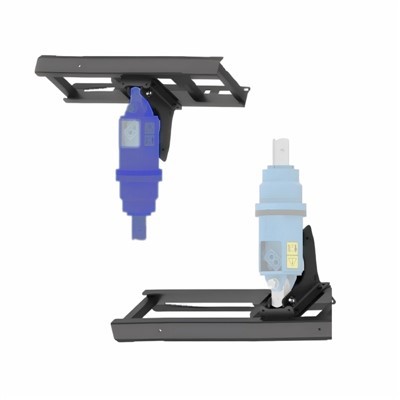
Hey there! As a supplier of slewing drives, I often get asked about the maximum deceleration a slewing drive can withstand. It's a crucial question, especially for those who rely on these drives in various applications. So, let's dive right into it.
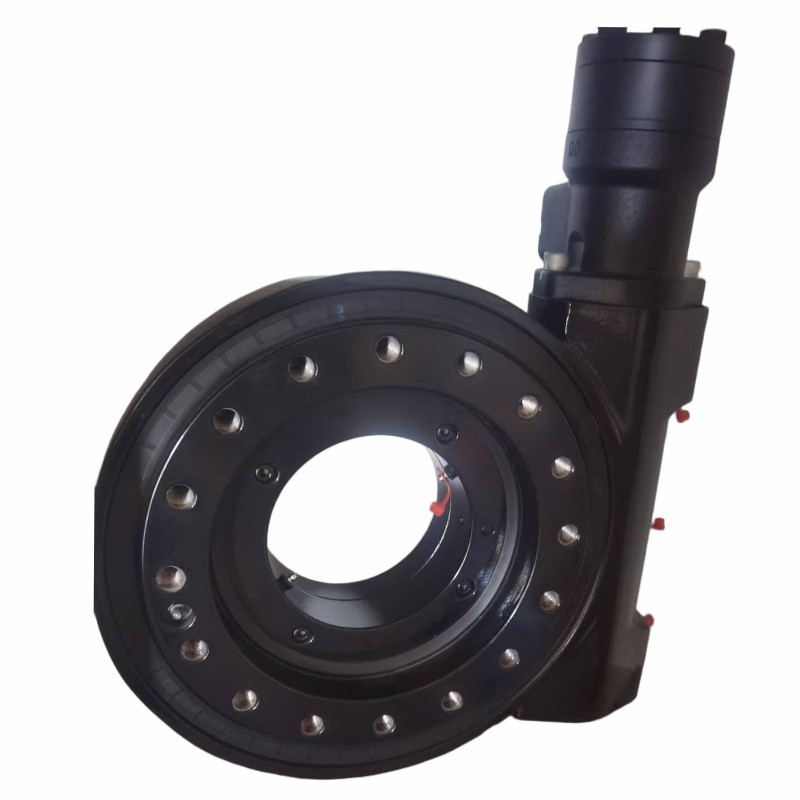
First off, what exactly is a slewing drive? Well, it's a mechanical device that provides rotary motion. You can find them in all sorts of places, from solar tracking systems to construction equipment. They're pretty versatile, and that's why they're so popular.
Now, back to the main question: what's the maximum deceleration a slewing drive can handle? The answer isn't straightforward because it depends on several factors.
Factors Affecting Maximum Deceleration
1. Design and Construction
The design of the slewing drive plays a huge role. Different models have different internal structures, gear ratios, and bearing capacities. For example, a slewing drive with a heavy - duty bearing can generally withstand higher deceleration forces compared to one with a lighter - duty bearing. The materials used in construction also matter. High - quality steel gears and robust housing can handle more stress during deceleration.
2. Load Capacity
The amount of load the slewing drive is carrying is a major factor. If it's under a light load, it can decelerate more quickly without causing too much stress. But if it's carrying a heavy load, the deceleration needs to be more gradual. Imagine trying to stop a fully - loaded truck suddenly compared to an empty one. The same principle applies here.
3. Speed of Operation
The speed at which the slewing drive is rotating before deceleration is important. A drive spinning at a high speed will generate more kinetic energy. To safely decelerate, it might need more time and a lower deceleration rate. For instance, if a slewing drive in a wind turbine is rotating at a high RPM, a sudden stop could cause damage to the gears and bearings.
4. Lubrication
Proper lubrication is key. Good lubrication reduces friction between the moving parts. When decelerating, less friction means less wear and tear on the components. If the slewing drive isn't lubricated correctly, the maximum deceleration it can withstand will be significantly reduced.

Calculating Maximum Deceleration
To figure out the maximum deceleration for a specific slewing drive, engineers usually use a combination of theoretical calculations and real - world testing.
The theoretical part involves looking at the physical properties of the drive, such as its moment of inertia, gear ratios, and the strength of its components. They use equations from mechanics to estimate how much force the drive can handle during deceleration.
Real - world testing is also essential. Manufacturers like us will test different slewing drives under various conditions. We'll measure the forces, the wear on the components, and the overall performance during deceleration. This helps us fine - tune our products and provide more accurate information to our customers.
Why It Matters
Understanding the maximum deceleration is crucial for several reasons.
Safety
Safety is always a top priority. If a slewing drive decelerates too quickly, it can cause parts to break or malfunction. This can be dangerous, especially in applications like construction or heavy machinery. For example, in a crane with a slewing drive, a sudden and improper deceleration could lead to the load swinging uncontrollably, putting workers at risk.
Efficiency
Knowing the right deceleration rate can improve the efficiency of the system. If the deceleration is too slow, it can waste time and energy. On the other hand, if it's too fast, it can cause unnecessary wear and tear, leading to more frequent maintenance and replacement costs.
Product Lifespan
Proper deceleration can extend the lifespan of the slewing drive. By not subjecting it to excessive stress during deceleration, the components will last longer. This means less downtime for repairs and replacements, which is great for our customers' bottom line.
Our Slewing Drives
At our company, we offer a wide range of slewing drives, including the Imo Slew Drive. This drive is designed with high - quality materials and advanced engineering. It's suitable for solar tracking systems, where precise and reliable operation is crucial.
We've conducted extensive testing on our slewing drives to determine their maximum deceleration capabilities. Our team of experts is always available to help you choose the right drive for your application and provide guidance on the appropriate deceleration rates.
How to Determine the Right Deceleration for Your Application
If you're not sure what deceleration rate is right for your slewing drive, here are some steps you can take:
Consult the Manufacturer
We're here to help! Reach out to us, and our technical support team can provide you with detailed information about the maximum deceleration for our slewing drives. We can also offer advice based on your specific application.
Analyze Your Application
Look at the load, speed, and operating conditions of your system. If it's a high - speed, heavy - load application, you'll likely need a more gradual deceleration. If it's a light - load, low - speed application, you might be able to get away with a faster deceleration.
Consider Safety Margins
It's always a good idea to build in some safety margins. Don't push the slewing drive to its absolute maximum deceleration limit. This will help ensure the long - term reliability and safety of your system.
Conclusion
So, in conclusion, the maximum deceleration a slewing drive can withstand depends on multiple factors like design, load capacity, speed, and lubrication. It's crucial to understand these factors to ensure the safety, efficiency, and longevity of your slewing drive.
If you're in the market for a slewing drive or need more information about deceleration rates, don't hesitate to get in touch with us. We're here to help you make the right choice for your application. Whether you need a drive for a solar tracking system or heavy - duty construction equipment, we've got you covered.
References
- "Mechanical Engineering Handbook" by Myer Kutz
- Industry research reports on slewing drive performance and applications.