In the ever - evolving landscape of renewable energy, solar power has emerged as a leading source of clean and sustainable electricity. One of the key technologies that enhance the efficiency of solar power systems is the solar tracking system, and at the heart of many of these systems lies the slewing drive. As a trusted slewing drive for solar tracking system supplier, I'm excited to delve into how a slewing drive works in a solar tracking system.
The Basics of Solar Tracking Systems
Before we dive into the workings of a slewing drive, it's essential to understand the concept of solar tracking systems. Solar panels generate electricity by converting sunlight into electrical energy. The more sunlight they receive, the more electricity they can produce. A fixed solar panel is limited by its static position, which means it can only capture sunlight at a specific angle and for a limited period during the day.
Solar tracking systems, on the other hand, are designed to follow the sun's path across the sky. There are two main types of solar tracking systems: single - axis and dual - axis. Single - axis trackers move the solar panels either horizontally (east - west) or vertically (tilt - up and down), while dual - axis trackers can move in both directions simultaneously. This dynamic movement allows the solar panels to maintain an optimal angle relative to the sun throughout the day, significantly increasing the amount of sunlight they receive and, consequently, the electricity they generate.
What is a Slewing Drive?
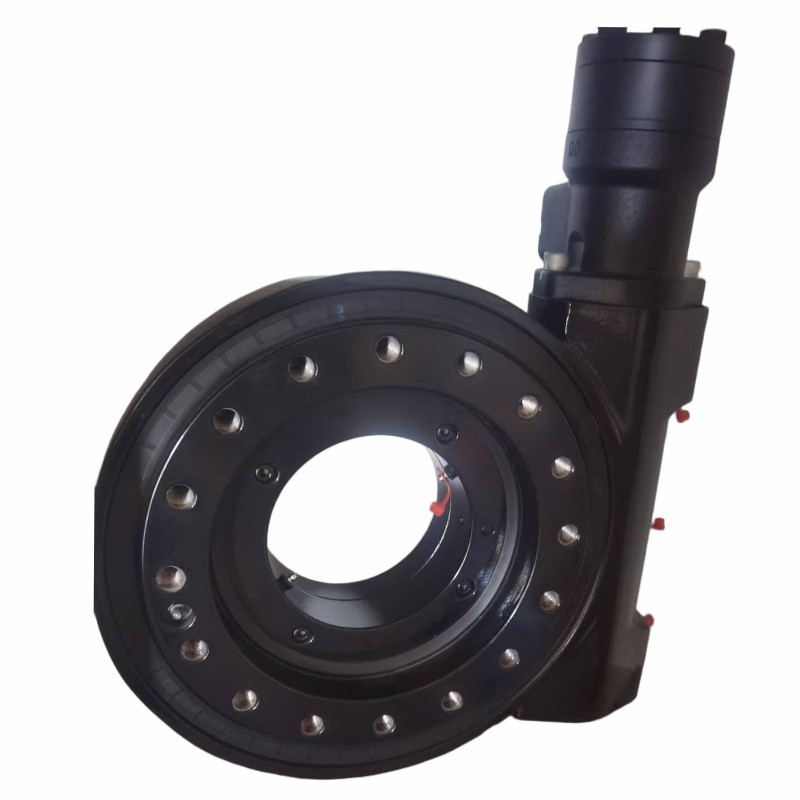
A slewing drive is a compact, integrated gearbox unit that combines a worm gear, a slewing bearing, and a housing. It is designed to provide precise and reliable rotational motion. The worm gear, which is a type of gear with a screw - like shape, meshes with the teeth of the slewing bearing. When the worm gear rotates, it causes the slewing bearing to turn, resulting in the rotation of the attached load.
How a Slewing Drive Works in a Solar Tracking System
1. Power Transmission
The slewing drive in a solar tracking system receives power from an electric motor. The motor provides the necessary torque to turn the worm gear. The worm gear, in turn, transfers this rotational force to the slewing bearing. The unique design of the worm gear and slewing bearing combination allows for high torque transmission in a relatively small package. This is crucial in solar tracking systems, as the drive needs to move large and heavy solar panels with precision.
2. Precision Control
Precision is key in solar tracking systems. The slewing drive allows for accurate control of the movement of the solar panels. The gear ratio of the worm gear and slewing bearing determines the speed and torque of the rotation. By adjusting the input speed of the motor and the gear ratio, the system can be fine - tuned to achieve the desired movement of the solar panels. For example, during the early morning and late afternoon, when the sun's angle changes more slowly, the slewing drive can move the panels at a slower speed. In the middle of the day, when the sun moves more rapidly, the drive can increase the speed of rotation.
3. Load Handling
Solar panels are heavy, and they need to be supported and moved smoothly. The slewing drive is designed to handle the weight of the solar panels and any additional loads, such as wind forces. The slewing bearing provides a large contact area for the load, distributing the weight evenly and reducing stress on the components. This ensures the long - term reliability of the solar tracking system.
4. Self - Locking Feature
One of the significant advantages of using a slewing drive in a solar tracking system is its self - locking feature. The worm gear and slewing bearing combination has a high frictional resistance, which prevents the drive from back - driving. This means that once the solar panels are positioned at a certain angle, they will stay in place without the need for additional braking mechanisms. This self - locking feature is particularly important during high - wind conditions, as it helps to keep the solar panels stable and prevents damage.
The Role of the Slewing Drive in Different Types of Solar Tracking Systems
Single - Axis Trackers
In single - axis solar tracking systems, the slewing drive is responsible for moving the solar panels along a single axis. For example, in a horizontal single - axis tracker, the slewing drive rotates the panels from east to west to follow the sun's daily path. The drive needs to be able to handle the continuous rotation and the associated loads. Our Imo Slew Drive is an excellent choice for single - axis trackers, offering high torque, precision control, and reliable performance.
Dual - Axis Trackers
Dual - axis trackers require more complex movement, as they need to adjust the position of the solar panels in both the horizontal and vertical directions. Two slewing drives are typically used in a dual - axis tracker, one for each axis of movement. The drives need to work in synchronization to ensure that the solar panels are always oriented towards the sun. Our slewing drives are designed to be easily integrated into dual - axis tracking systems, providing coordinated and accurate movement.
Advantages of Using Our Slewing Drives in Solar Tracking Systems
Durability
Our slewing drives are built to last. They are made from high - quality materials, such as hardened steel for the gears and bearings. The housing is designed to protect the internal components from environmental factors, such as dust, moisture, and UV radiation. This ensures that the drives can operate reliably in harsh outdoor conditions for many years.
High Efficiency
Efficiency is crucial in solar power systems. Our slewing drives are designed to minimize power losses during operation. The optimized gear design and high - quality bearings reduce friction, allowing for more efficient power transmission. This means that more of the input power from the motor is used to move the solar panels, resulting in higher overall system efficiency.
Customization
We understand that different solar tracking systems have different requirements. That's why we offer customizable slewing drives. We can adjust the gear ratio, the size of the slewing bearing, and other parameters to meet the specific needs of your project. Whether you are building a small - scale residential solar system or a large - scale commercial solar farm, we can provide a slewing drive that is tailored to your requirements.
Conclusion
The slewing drive plays a vital role in solar tracking systems. It provides the power, precision, and reliability needed to move solar panels and maximize their exposure to sunlight. As a slewing drive for solar tracking system supplier, we are committed to providing high - quality products that meet the demanding requirements of the solar industry.

If you are in the process of designing or upgrading a solar tracking system, we encourage you to reach out to us for more information. Our team of experts can help you select the right slewing drive for your project and provide technical support throughout the installation and operation process. Contact us today to start a discussion about your solar tracking system needs and explore how our slewing drives can enhance the performance of your solar power system.
References
- "Solar Tracking Systems: Principles, Technologies, and Applications" by authors in the field of renewable energy engineering.
- Technical manuals of slewing drive manufacturers.