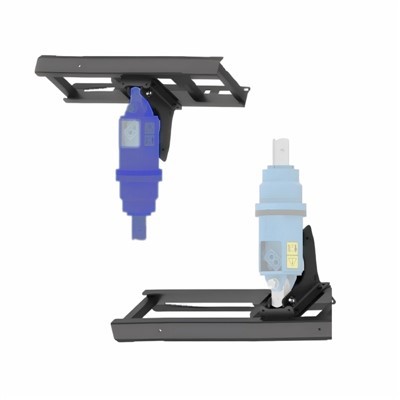
As an auger drive supplier, I've witnessed firsthand the diverse needs of customers when it comes to choosing between single - speed and multi - speed auger drives. In this blog, I'll delve into the key differences between these two types of auger drives, helping you make an informed decision for your specific applications.
1. Basic Working Principle
Let's start with the fundamental working principle of auger drives. An auger drive is a mechanical device used to rotate an auger bit, which is then used for drilling holes in various materials such as soil, ice, or rock. The power source, typically a hydraulic motor, transfers energy to the auger bit through the drive system.
A single - speed auger drive operates at a fixed rotational speed. Once the drive is engaged, the auger bit rotates at a pre - determined rate. This simplicity in design means that there are fewer components involved in the speed - control mechanism. For example, in a basic single - speed auger drive, the hydraulic motor is directly connected to the auger bit with a simple gearbox that provides a fixed gear ratio.


On the other hand, a multi - speed auger drive offers the flexibility of changing the rotational speed of the auger bit. This is achieved through a more complex gearbox or a variable - displacement hydraulic motor. The operator can select different speeds according to the drilling conditions and the type of material being drilled.
2. Drilling Performance
2.1 Efficiency in Different Materials
Single - speed auger drives are often optimized for a specific type of material. For instance, if a single - speed drive is designed for soft soil, it will have a speed that allows for efficient cutting and removal of the soil. However, when it comes to harder materials like compacted clay or rock, the fixed speed may not be sufficient. The auger bit may struggle to penetrate the material, leading to slower drilling progress and increased wear on the bit.
Multi - speed auger drives shine in this aspect. When drilling in soft soil, the operator can select a higher speed to quickly remove the material. As the drill encounters harder layers, the speed can be reduced to increase the torque. Torque is the rotational force that helps the auger bit break through tough materials. By adjusting the speed, the multi - speed auger drive can maintain a more consistent drilling performance across different materials.
2.2 Drilling Depth and Precision
In terms of drilling depth, single - speed auger drives may face limitations. As the drill goes deeper, the resistance from the surrounding material increases. With a fixed speed, the drive may not be able to generate enough torque to continue drilling effectively. This can result in a shallower hole than expected or a hole with an irregular shape.
Multi - speed auger drives can overcome these issues. By reducing the speed and increasing the torque as the drill goes deeper, they can maintain a stable drilling process. This also contributes to better precision. The ability to control the speed allows for more accurate positioning of the auger bit, resulting in holes with a more consistent diameter and depth.
3. Power and Energy Consumption
3.1 Power Requirements
Single - speed auger drives generally have a simpler power - transmission system. Since they operate at a fixed speed, the power requirements are relatively straightforward. The hydraulic motor is sized to provide the necessary power at the fixed speed. This simplicity often means that single - speed drives can be powered by smaller hydraulic systems, which can be an advantage in applications where power is limited.
Multi - speed auger drives, due to their more complex design, require a more powerful hydraulic system. The variable - speed mechanism and the ability to generate high torque at low speeds demand more energy from the hydraulic source. However, this also means that they can handle more demanding drilling tasks.
3.2 Energy Efficiency
In terms of energy efficiency, it depends on the application. For continuous drilling in a single type of material where the fixed speed of a single - speed drive is well - suited, it can be more energy - efficient. There is no need to constantly adjust the speed, and the drive operates at its optimal efficiency point.
Multi - speed auger drives, while consuming more energy overall, can be more efficient in variable - material applications. By adjusting the speed according to the drilling conditions, they can avoid over - powering the drill in soft materials and under - powering it in hard materials. This targeted use of power can result in energy savings in the long run.
4. Maintenance and Durability
4.1 Component Complexity
Single - speed auger drives have fewer components in their speed - control system. This simplicity makes them easier to maintain. There are fewer parts that can wear out or malfunction, and the maintenance procedures are generally less complex. For example, the gearbox in a single - speed drive has a fixed gear ratio, which means there are no additional shifting mechanisms to worry about.
Multi - speed auger drives, with their more complex gearboxes or variable - displacement hydraulic motors, require more attention. The additional components increase the chances of wear and tear, and the maintenance procedures are more involved. For instance, the shifting mechanism in a multi - speed gearbox needs to be regularly inspected and lubricated to ensure smooth operation.
4.2 Wear and Tear
The wear and tear on the auger bit and other components also differ between the two types of drives. In a single - speed drive, if the speed is not suitable for the material being drilled, the auger bit may experience excessive wear. For example, using a high - speed setting in hard rock can cause the bit to dull quickly.
Multi - speed auger drives can reduce wear on the bit by allowing the operator to select the appropriate speed. By using a lower speed in hard materials, the bit is subjected to less stress, which can extend its lifespan. However, the more complex components in the multi - speed drive itself may be more prone to wear if not properly maintained.
5. Applications
5.1 Single - Speed Auger Drives
Single - speed auger drives are commonly used in applications where the drilling conditions are relatively consistent. For example, in landscaping projects where the soil is mostly soft and uniform, a single - speed drive can provide a cost - effective solution. They are also suitable for small - scale projects where the drilling requirements are not very demanding. Our X2500 Earth Drill Replacement Drive is a great example of a single - speed auger drive that is well - suited for such applications.
5.2 Multi - Speed Auger Drives
Multi - speed auger drives are ideal for applications where the drilling conditions vary. Construction projects often involve drilling through different layers of soil, rock, and concrete. In these cases, the ability to adjust the speed is crucial. Our Skid Steer Earth Auger Drive 6000Nm and Heavy Duty Auger Drive are designed to handle these challenging applications with their multi - speed capabilities.
Conclusion
In conclusion, the choice between a single - speed and multi - speed auger drive depends on your specific needs. If you have a simple, consistent drilling task and are looking for a cost - effective and easy - to - maintain solution, a single - speed auger drive may be the right choice. However, if you need to drill through different materials or require more precise control over the drilling process, a multi - speed auger drive is the better option.
As an auger drive supplier, we are committed to providing high - quality products that meet your requirements. Whether you need a single - speed or multi - speed auger drive, we have the expertise and the range of products to assist you. If you are interested in our auger drives or have any questions about which type is suitable for your project, please don't hesitate to contact us for procurement and further discussions.
References
- Engineering textbooks on hydraulic machinery and drilling equipment.
- Industry reports on the use of auger drives in different sectors.