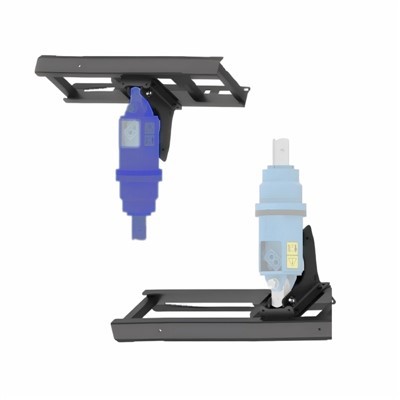
As a leading supplier of auger drives, I've encountered numerous inquiries from customers about the maximum drilling depth achievable in different soil types. This blog post aims to provide comprehensive insights into this crucial aspect, helping you make informed decisions when selecting the right auger drive for your projects.
Understanding Soil Types and Their Impact on Drilling
Before delving into the maximum drilling depths, it's essential to understand the different soil types and how they affect the performance of an auger drive. Generally, soil can be classified into several categories, each with unique characteristics that influence drilling operations.
1. Sandy Soil
Sandy soil is composed of large particles, resulting in low cohesion and high permeability. Drilling in sandy soil is relatively easy due to its loose structure. Auger drives can penetrate sandy soil with minimal resistance, allowing for faster drilling speeds. However, the lack of cohesion means that the hole walls may collapse easily, especially at greater depths.
For most standard auger drives, the maximum drilling depth in sandy soil can range from 10 to 20 feet. This depth can be achieved with relative ease, provided that the auger is properly designed to handle the loose soil. Our Hydraulic Auger Drive for Backhoes is an excellent choice for drilling in sandy soil, offering high torque and efficient soil removal.
2. Clay Soil
Clay soil consists of fine particles that have high cohesion and low permeability. Drilling in clay soil can be challenging due to its sticky nature, which can cause the auger to clog and increase the resistance during drilling. However, clay soil provides better stability for the hole walls, reducing the risk of collapse.
The maximum drilling depth in clay soil typically ranges from 8 to 15 feet. To achieve these depths, it's crucial to use an auger drive with sufficient torque and a well-designed flighting to prevent clogging. Our PD4 Auger Drive Replacement is specifically engineered to handle the challenges of drilling in clay soil, with a powerful motor and optimized flighting design.
3. Loam Soil
Loam soil is a mixture of sand, silt, and clay, offering a balanced combination of drainage and fertility. It is considered one of the most favorable soil types for drilling, as it provides moderate resistance and good stability for the hole walls.
In loam soil, auger drives can typically reach depths of 12 to 25 feet. The relatively consistent texture of loam soil allows for smooth drilling operations, making it easier to achieve greater depths. Our X2500 Earth Drill Replacement Drive is well-suited for drilling in loam soil, providing high performance and reliability.
4. Rocky Soil
Rocky soil contains a significant amount of rocks and boulders, posing a significant challenge for drilling operations. The presence of rocks can cause excessive wear on the auger teeth and reduce the drilling efficiency. Additionally, the hardness of the rocks can limit the maximum drilling depth.
The maximum drilling depth in rocky soil depends on the size and hardness of the rocks. In general, it can range from 3 to 10 feet. To drill in rocky soil, it's essential to use an auger drive with a heavy-duty design and carbide-tipped teeth to withstand the impact of the rocks. Our auger drives are available with various tooth configurations to suit different rock conditions, ensuring optimal performance in rocky soil.
Factors Affecting Maximum Drilling Depth
In addition to soil type, several other factors can affect the maximum drilling depth achievable with an auger drive. These factors include:
1. Auger Drive Specifications
The specifications of the auger drive, such as torque, speed, and power, play a crucial role in determining the maximum drilling depth. Higher torque and power ratings generally allow for deeper drilling, especially in challenging soil conditions. It's important to choose an auger drive that is appropriately sized for your specific drilling requirements.
2. Auger Design
The design of the auger, including the diameter, length, and flighting pitch, can also impact the drilling depth. A larger diameter auger may require more power to penetrate the soil, but it can also remove more soil per revolution, potentially increasing the drilling speed. The length of the auger should be selected based on the desired drilling depth, while the flighting pitch should be optimized for efficient soil removal.
3. Equipment Maintenance
Proper maintenance of the auger drive and auger is essential to ensure optimal performance and maximum drilling depth. Regular inspection, lubrication, and replacement of worn parts can help prevent breakdowns and extend the lifespan of the equipment. It's also important to follow the manufacturer's recommended maintenance schedule to keep the equipment in top condition.
4. Operator Skill
The skill and experience of the operator can significantly affect the drilling depth and efficiency. A skilled operator knows how to adjust the drilling parameters, such as speed and pressure, to optimize the performance of the auger drive. They can also identify and address any issues that may arise during the drilling process, ensuring a smooth and successful operation.
Choosing the Right Auger Drive for Your Project
Selecting the right auger drive for your project is crucial to achieving the desired drilling depth and efficiency. Here are some tips to help you make the right choice:
1. Consider the Soil Type
As discussed earlier, different soil types require different auger drive specifications and designs. Before purchasing an auger drive, it's important to assess the soil conditions at your drilling site and choose an auger drive that is suitable for the soil type.
2. Determine the Drilling Depth
Based on your project requirements, determine the maximum drilling depth you need to achieve. This will help you select an auger drive with the appropriate torque and power ratings to handle the drilling depth.
3. Evaluate the Auger Drive Specifications
Carefully evaluate the specifications of the auger drive, including torque, speed, power, and hydraulic flow requirements. Make sure the auger drive meets your specific drilling needs and is compatible with your equipment.
4. Consider the Auger Design
Choose an auger design that is suitable for the soil type and drilling depth. Consider factors such as diameter, length, flighting pitch, and tooth configuration to ensure optimal performance.
5. Look for Quality and Reliability
Invest in a high-quality auger drive from a reputable manufacturer. Look for features such as durable construction, reliable hydraulic components, and easy maintenance to ensure long-term performance and reliability.
Conclusion
The maximum drilling depth in different soil types for an auger drive depends on several factors, including soil type, auger drive specifications, auger design, equipment maintenance, and operator skill. By understanding these factors and choosing the right auger drive for your project, you can achieve the desired drilling depth and efficiency.
As a leading supplier of auger drives, we offer a wide range of high-quality auger drives and accessories to meet your drilling needs. Our auger drives are designed and manufactured to the highest standards, ensuring reliable performance and long-term durability. Whether you're drilling in sandy soil, clay soil, loam soil, or rocky soil, we have the right solution for you.


If you have any questions or need assistance in choosing the right auger drive for your project, please don't hesitate to contact us. Our team of experts is ready to help you make the best decision and ensure the success of your drilling operation.
References
- ASTM International. (2023). Standard Classification of Soils for Engineering Purposes (Unified Soil Classification System). ASTM D2487-17.
- ASAE Standards. (2023). Agricultural Machinery Management Data. ASAE EP496.3.
- Soil Science Society of America. (2023). Soil Science Glossary Terms.