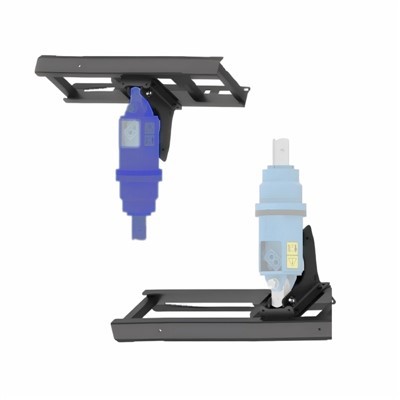
What is the torsional strength of a Fixed Centre Cradle Frame?
As a supplier of Fixed Centre Cradle Frames, I often encounter inquiries about the torsional strength of these essential components. Torsional strength is a critical characteristic that determines the frame's ability to withstand twisting forces without failure. In this blog post, I will delve into the concept of torsional strength, its significance for Fixed Centre Cradle Frames, and how it impacts their performance in various applications.
Understanding Torsional Strength
Torsional strength refers to the maximum amount of torque or twisting force that a material or structure can endure before it deforms or breaks. When a Fixed Centre Cradle Frame is subjected to torsional forces, it experiences a rotational stress that tries to twist the frame around its axis. This can occur due to uneven loading, misalignment, or external forces acting on the frame during operation.


The torsional strength of a Fixed Centre Cradle Frame depends on several factors, including the material properties, cross - sectional shape, and dimensions of the frame. Materials with high shear strength and modulus of rigidity are generally more resistant to torsional deformation. For example, steel is a commonly used material for Fixed Centre Cradle Frames because of its excellent mechanical properties, including high torsional strength.
The cross - sectional shape of the frame also plays a crucial role in determining its torsional strength. Closed - section shapes, such as tubes or boxes, are more efficient in resisting torsional forces compared to open - section shapes, like channels or angles. This is because closed - section shapes have a more uniform distribution of material around the axis of rotation, which helps to resist the twisting motion more effectively.
Significance of Torsional Strength for Fixed Centre Cradle Frames
In the context of Fixed Centre Cradle Frames, torsional strength is of utmost importance for several reasons. Firstly, these frames are often used in applications where they need to support heavy loads and transmit forces. For instance, in earth - drilling equipment, the Fixed Centre Cradle Frame Fixed Centre Cradle Frame holds the drill head and guides the drilling process. During drilling, the frame is subjected to significant torsional forces due to the rotation of the drill bit and the reaction forces from the ground. If the frame does not have sufficient torsional strength, it may deform or fail, leading to equipment breakdown and potential safety hazards.
Secondly, torsional strength affects the overall stability and accuracy of the equipment. A frame with low torsional strength may experience excessive twisting, which can cause misalignment of the components supported by the frame. This misalignment can result in poor drilling performance, increased wear and tear on the equipment, and reduced precision in the drilling operation. On the other hand, a frame with high torsional strength can maintain its shape and alignment under load, ensuring smooth and accurate operation of the equipment.
Factors Affecting Torsional Strength in Real - World Applications
In real - world applications, several factors can influence the torsional strength requirements of a Fixed Centre Cradle Frame. One of the key factors is the type of load that the frame will be subjected to. Different applications may have different loading patterns, such as static or dynamic loads. Dynamic loads, which are caused by moving or vibrating components, can generate higher torsional forces compared to static loads. For example, in a construction equipment that is constantly in motion, the Fixed Centre Cradle Frame needs to be designed to withstand the dynamic torsional forces generated during operation.
The operating environment also plays a role in determining the torsional strength requirements. Harsh environments, such as those with high temperatures, corrosive substances, or extreme weather conditions, can degrade the material properties of the frame over time. This can reduce the frame's torsional strength and make it more susceptible to failure. Therefore, when designing a Fixed Centre Cradle Frame for such environments, additional considerations need to be taken into account to ensure its long - term performance.
Another factor is the frequency of use. Frames that are used frequently or for extended periods may experience fatigue due to repeated torsional loading. Fatigue can cause cracks to develop in the material, which can gradually reduce the frame's torsional strength and eventually lead to failure. To prevent fatigue failure, the frame needs to be designed with appropriate safety factors and materials that are resistant to fatigue.
Comparison with Side Shift Cradle Frames
It is also interesting to compare the torsional strength of Fixed Centre Cradle Frames with that of Side Shift Cradle Frames Side Shift Cradle Frame. Side Shift Cradle Frames are designed to allow lateral movement of the supported components, which can introduce additional torsional forces due to the off - center loading. In general, Fixed Centre Cradle Frames may have a more straightforward loading pattern and can be optimized for torsional strength more easily compared to Side Shift Cradle Frames. However, the specific torsional strength requirements for each type of frame depend on the application and the design parameters.
Ensuring Adequate Torsional Strength in Fixed Centre Cradle Frames
As a supplier, we take several steps to ensure that our Fixed Centre Cradle Frames have adequate torsional strength. Firstly, we use advanced design and engineering techniques to optimize the frame's cross - sectional shape and dimensions. Through computer - aided design (CAD) and finite element analysis (FEA), we can simulate the torsional loading conditions and evaluate the frame's performance. This allows us to make design modifications to improve the torsional strength before the frame is manufactured.
Secondly, we carefully select the materials for our frames. We source high - quality steel and other materials with excellent mechanical properties, including high shear strength and modulus of rigidity. Our manufacturing processes are also carefully controlled to ensure that the frames are fabricated to the highest standards. This includes proper welding, heat treatment, and surface finishing to enhance the frame's durability and torsional strength.
Finally, we conduct rigorous testing on our Fixed Centre Cradle Frames to verify their torsional strength. We use specialized testing equipment to apply torsional loads to the frames and measure their response. This testing helps us to ensure that the frames meet or exceed the specified torsional strength requirements and can perform reliably in real - world applications.
Conclusion
Torsional strength is a critical property of Fixed Centre Cradle Frames that determines their ability to withstand twisting forces and perform effectively in various applications. By understanding the concept of torsional strength, its significance, and the factors that affect it, we can design and manufacture high - quality frames that meet the needs of our customers.
If you are in the market for a Fixed Centre Cradle Frame and are concerned about its torsional strength, we are here to help. Our team of experts can provide you with detailed information about our products, including their torsional strength specifications, and assist you in selecting the right frame for your application. Contact us today to start the procurement discussion and find the perfect solution for your equipment.
References
- Budynas, R. G., & Nisbett, J. K. (2011). Shigley's Mechanical Engineering Design. McGraw - Hill.
- Ugural, A. C., & Fenster, S. K. (2011). Advanced Strength and Applied Elasticity. Pearson.