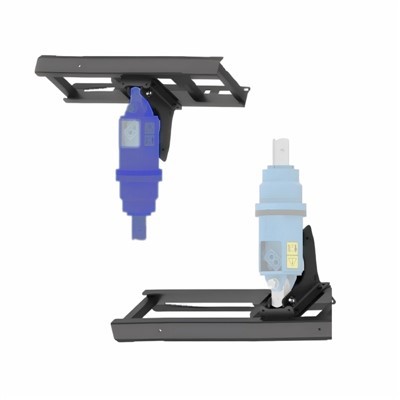
As a supplier of slewing drives for solar tracking systems, I understand the critical role that lubricants play in ensuring the optimal performance and longevity of these essential components. In this blog post, I will delve into the types of lubricants that are suitable for slewing drives in solar tracking systems, considering factors such as environmental conditions, load requirements, and operational characteristics.
Importance of Lubrication in Slewing Drives
Slewing drives are mechanical devices that enable the rotation of solar panels to track the sun's movement throughout the day. These drives are subjected to various forces, including radial and axial loads, as well as continuous rotation. Proper lubrication is essential to reduce friction, wear, and heat generation, which can significantly extend the service life of the slewing drive and improve its overall efficiency.
Lubricants also help to protect the internal components of the slewing drive from corrosion and contamination, ensuring smooth operation even in harsh environmental conditions. By reducing friction, lubricants can also minimize energy consumption, which is particularly important in solar tracking systems where energy efficiency is a key consideration.
Factors to Consider When Selecting Lubricants
When choosing a lubricant for a slewing drive in a solar tracking system, several factors need to be taken into account:
1. Environmental Conditions
Solar tracking systems are often installed in outdoor environments, where they are exposed to a wide range of temperatures, humidity levels, and weather conditions. The lubricant should be able to withstand these environmental factors without losing its lubricating properties. For example, in regions with extreme temperatures, a lubricant with a wide operating temperature range is required to ensure proper lubrication at both high and low temperatures.
2. Load Requirements
Slewing drives in solar tracking systems are designed to handle specific loads, including the weight of the solar panels and the forces generated during rotation. The lubricant should be able to provide sufficient load-carrying capacity to prevent metal-to-metal contact and reduce wear on the gears and bearings. High-viscosity lubricants are generally preferred for applications with heavy loads, as they can form a thicker lubricating film to protect the components.
3. Operational Characteristics
The operational characteristics of the slewing drive, such as the speed of rotation and the frequency of movement, also influence the choice of lubricant. For high-speed applications, a lubricant with good anti-wear and anti-oxidation properties is necessary to prevent premature wear and degradation. In addition, the lubricant should have low friction coefficients to reduce energy consumption and improve the overall efficiency of the system.
Types of Lubricants Suitable for Slewing Drives
Based on the above factors, the following types of lubricants are commonly used in slewing drives for solar tracking systems:


1. Greases
Greases are a popular choice for lubricating slewing drives due to their excellent adhesion properties and ability to stay in place for extended periods. They consist of a base oil, a thickening agent, and various additives to enhance their performance. Greases can provide good protection against wear, corrosion, and contamination, making them suitable for outdoor applications.
When selecting a grease for a slewing drive, it is important to consider the consistency, or NLGI grade, of the grease. The NLGI grade indicates the stiffness of the grease, with higher grades being stiffer. For slewing drives, a medium to high NLGI grade grease (e.g., NLGI 2 or 3) is typically recommended to ensure proper lubrication and prevent leakage.
Some greases are specifically formulated for use in high-temperature applications, while others are designed to provide excellent water resistance. For solar tracking systems located in coastal areas or regions with high humidity, a grease with good water resistance properties is essential to prevent corrosion and rusting.
2. Oils
Oils are another option for lubricating slewing drives, especially in applications where continuous lubrication is required. They offer better heat dissipation properties compared to greases, which can be beneficial in high-speed or high-load applications. Oils also have lower friction coefficients, which can improve the efficiency of the slewing drive.
When choosing an oil for a slewing drive, the viscosity of the oil is an important consideration. The viscosity should be selected based on the operating temperature and load requirements of the system. A lower viscosity oil is suitable for low-temperature applications, while a higher viscosity oil is recommended for high-temperature or heavy-load applications.
Synthetic oils are often preferred for slewing drives in solar tracking systems due to their superior performance characteristics. They offer better oxidation stability, anti-wear properties, and temperature resistance compared to mineral oils. Synthetic oils can also provide longer service intervals, reducing maintenance costs and downtime.
3. Solid Lubricants
In some cases, solid lubricants may be used in conjunction with greases or oils to provide additional protection and reduce friction. Solid lubricants, such as graphite or molybdenum disulfide, can form a thin film on the surface of the components, reducing wear and improving the performance of the slewing drive.
Solid lubricants are particularly useful in applications where traditional lubricants may not be suitable, such as in high-temperature or high-vacuum environments. They can also be used to lubricate hard-to-reach areas or components that are subject to extreme conditions.
Recommended Lubricants for Imo Slew Drive
As a supplier of slewing drives for solar tracking systems, we recommend using high-quality lubricants that are specifically formulated for the requirements of our Imo Slew Drive. Our technical team has conducted extensive testing to identify the lubricants that provide the best performance and reliability for our products.
For most applications, we recommend using a high-quality synthetic grease with a NLGI 2 or 3 grade. This type of grease offers excellent adhesion, water resistance, and load-carrying capacity, making it suitable for outdoor environments and heavy-load applications. Some of the recommended grease brands include Mobilgrease XHP 222, Shell Gadus S2 V220, and Klüberplex BEM 41-132.
In applications where continuous lubrication is required, we recommend using a synthetic oil with a viscosity grade of ISO VG 100 or 150. Synthetic oils offer better heat dissipation and anti-wear properties compared to mineral oils, ensuring smooth operation and long service life. Some of the recommended oil brands include Mobil SHC 626, Shell Tellus S2 M 100, and Klüber Isoflex NBU 15.
Conclusion
Choosing the right lubricant for a slewing drive in a solar tracking system is crucial to ensure its optimal performance and longevity. By considering factors such as environmental conditions, load requirements, and operational characteristics, you can select a lubricant that provides the best protection and performance for your specific application.
As a supplier of slewing drives for solar tracking systems, we are committed to providing our customers with high-quality products and technical support. If you have any questions or need assistance in selecting the right lubricant for your slewing drive, please do not hesitate to contact us. We look forward to working with you to meet your solar tracking system needs.
References
- "Lubrication Fundamentals" by John W. Murphy
- "Handbook of Lubrication and Tribology, Volume II: Application and Maintenance" edited by Bhushan Bharat
- Manufacturer's technical data sheets for slewing drives and lubricants