What is the dynamic response of a slew drive gearbox?
As a dedicated supplier of slew drive gearboxes, I've had the privilege of witnessing the remarkable capabilities and applications of these mechanical marvels. In this blog, I aim to delve into the concept of the dynamic response of a slew drive gearbox, exploring its significance, influencing factors, and real - world implications.
Understanding the Basics of a Slew Drive Gearbox
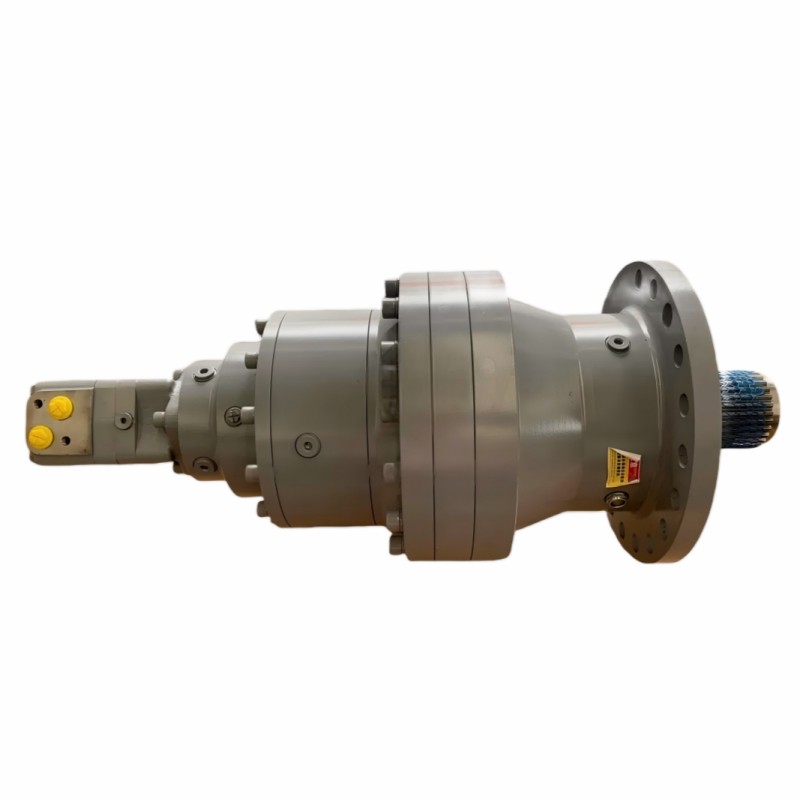
Before we jump into the dynamic response, let's briefly recap what a slew drive gearbox is. A slew drive is a compact, high - torque, and efficient gear system that combines a worm gear or a planetary gear arrangement with a large - diameter slewing ring. This design allows for precise rotation around a vertical or horizontal axis, making it ideal for a wide range of applications such as solar trackers, construction equipment, and industrial automation.
The primary function of a slew drive gearbox is to transfer power from an input source (usually an electric motor) to an output shaft, while also providing a significant reduction in speed and an increase in torque. This enables the driven load to rotate smoothly and precisely, even under heavy loads.
Defining Dynamic Response
The dynamic response of a slew drive gearbox refers to its ability to respond to changes in input conditions, such as sudden variations in speed, torque, or direction. In other words, it measures how quickly and accurately the gearbox can adjust its output to match the desired operating parameters.

A good dynamic response is crucial for several reasons. Firstly, in applications where rapid and precise positioning is required, such as in robotic arms or satellite dish trackers, a gearbox with a fast dynamic response can ensure that the system reaches the desired position quickly and accurately. Secondly, in high - load applications, a gearbox with a robust dynamic response can handle sudden changes in load without stalling or experiencing excessive wear and tear.
Factors Affecting Dynamic Response
Several factors can influence the dynamic response of a slew drive gearbox. Let's take a closer look at some of the most important ones:
Gear Design
The type of gear arrangement used in the slew drive, whether it's a worm gear or a planetary gear, can have a significant impact on its dynamic response. Planetary gear systems generally offer better efficiency, higher torque density, and faster response times compared to worm gear systems. This is because planetary gears have multiple teeth in contact simultaneously, which allows for smoother power transmission and reduced backlash.
Backlash
Backlash is the amount of clearance between the teeth of the gears in a gearbox. A small amount of backlash is necessary to prevent the gears from binding, but excessive backlash can lead to poor dynamic response. When there is too much backlash, the gearbox may experience a delay in responding to changes in input, resulting in inaccurate positioning and reduced efficiency.
Inertia
The inertia of the load being driven by the slew drive gearbox also plays a crucial role in its dynamic response. A high - inertia load requires more torque to accelerate and decelerate, which can slow down the response time of the gearbox. To compensate for this, the gearbox may need to be sized appropriately or a more powerful motor may be required.
Lubrication
Proper lubrication is essential for maintaining the smooth operation and dynamic response of a slew drive gearbox. Lubricants reduce friction between the gear teeth, which helps to improve efficiency and reduce wear. In addition, they can also dampen vibrations and noise, which can have a positive impact on the overall dynamic performance of the gearbox.
Measuring Dynamic Response
There are several ways to measure the dynamic response of a slew drive gearbox. One common method is to use a step response test, where a sudden change in input speed or torque is applied to the gearbox, and the output response is measured over time. The time it takes for the output to reach a certain percentage (usually 95% or 98%) of its final value is known as the settling time, which is a key indicator of the gearbox's dynamic response.
Another method is to use a frequency response test, where the input to the gearbox is varied sinusoidally at different frequencies, and the output amplitude and phase shift are measured. This test can provide valuable information about the gearbox's stability, bandwidth, and resonance characteristics.
Real - World Applications and Implications
The dynamic response of a slew drive gearbox has significant implications in various real - world applications. Let's explore a few examples:
Solar Trackers
Solar trackers are used to orient solar panels towards the sun to maximize their energy capture. A slew drive gearbox with a fast dynamic response is essential for solar trackers, as it allows the panels to quickly adjust their position in response to the changing position of the sun. This ensures that the solar panels are always facing the sun at the optimal angle, which can significantly increase their energy output.
Construction Equipment
In construction equipment such as cranes and excavators, a slew drive gearbox with a robust dynamic response is necessary to handle the heavy loads and sudden changes in direction. For example, when a crane is lifting and rotating a heavy load, the gearbox needs to be able to respond quickly to changes in torque and speed to ensure safe and efficient operation.
Industrial Automation
In industrial automation applications, such as conveyor systems and robotic assembly lines, a slew drive gearbox with a precise dynamic response is crucial for accurate positioning and synchronization. For instance, in a robotic assembly line, the gearbox needs to be able to rotate the robotic arm to the exact position required for each assembly operation, which requires a fast and accurate dynamic response.
Our Product Range and Dynamic Response
At our company, we offer a wide range of slew drive gearboxes designed to meet the diverse needs of our customers. Our 3.15 Slewing Gearbox Reducer and 3.20 Slewing Gearbox Reducer are engineered with high - quality materials and advanced manufacturing techniques to ensure excellent dynamic response. These gearboxes feature low backlash, high - efficiency planetary gear systems, and optimized lubrication, which enable them to respond quickly and accurately to changes in input conditions.
In addition, our 4.12 Putzmeister Rotary Reducer is specifically designed for heavy - duty applications, offering a robust dynamic response even under extreme conditions. This reducer is built to handle high loads and sudden changes in torque, making it ideal for use in construction equipment and other demanding industries.
Conclusion
The dynamic response of a slew drive gearbox is a critical factor that determines its performance and suitability for various applications. By understanding the factors that affect dynamic response and choosing the right gearbox for your specific needs, you can ensure that your system operates efficiently, accurately, and reliably.
If you are in the market for a high - quality slew drive gearbox with excellent dynamic response, we invite you to contact us for more information. Our team of experts is ready to assist you in selecting the right product for your application and providing you with the support you need throughout the purchasing process.
References
- "Gear Design and Application" by Dudley, Darle W.
- "Mechanical Engineering Design" by Shigley, Joseph E. and Mischke, Charles R.
- "Power Transmission Design Handbook" by Seireg, A. and Kalsi, S.