In the realm of heavy - duty industrial and off - road applications, hydraulic recovery winches play a pivotal role. As a well - established hydraulic recovery winch supplier, I've witnessed firsthand the importance of understanding the efficiency of these remarkable pieces of equipment. In this blog, we'll delve deep into what efficiency means for a hydraulic recovery winch, how it is measured, and why it matters.
Defining Efficiency in Hydraulic Recovery Winches
Efficiency, in the context of a hydraulic recovery winch, can be broadly defined as the ratio of the useful work output of the winch to the total energy input. The useful work is typically the amount of force exerted to pull a load over a certain distance, while the energy input is the hydraulic power supplied to the winch.
Mathematically, efficiency (η) is expressed as: η = (Useful Work Output / Total Energy Input) × 100%. A higher efficiency percentage indicates that the winch is converting a larger proportion of the input energy into useful work, which is highly desirable for several reasons.
Factors Affecting the Efficiency of Hydraulic Recovery Winches
1. Hydraulic System Design
The design of the hydraulic system is a fundamental factor influencing winch efficiency. A well - designed hydraulic circuit minimizes energy losses due to factors such as fluid friction, pressure drops, and internal leakage. For example, using high - quality hydraulic hoses with smooth inner surfaces can reduce fluid friction, allowing the hydraulic fluid to flow more freely and efficiently. Additionally, properly sized valves and pumps ensure that the system operates at optimal pressure and flow rates, maximizing the transfer of energy to the winch drum.
2. Motor Efficiency
The hydraulic motor is the heart of the winch, responsible for converting hydraulic energy into mechanical rotational energy. The efficiency of the motor depends on its design, construction materials, and manufacturing quality. High - efficiency motors are designed to minimize internal losses, such as friction between moving parts and leakage of hydraulic fluid. For instance, motors with advanced sealing technologies can prevent fluid leakage, which not only improves efficiency but also extends the motor's lifespan.
3. Drum and Gearbox Design
The design of the winch drum and gearbox also impacts efficiency. A well - designed drum should have a smooth surface to reduce rope friction during winding and unwinding operations. Additionally, the gearbox should be designed to provide the appropriate gear ratio for the intended application. A gearbox with high - quality gears and proper lubrication can transfer power from the motor to the drum with minimal losses. For example, helical gears are often preferred over spur gears in winch applications because they offer smoother operation and higher efficiency due to their gradual tooth engagement.
4. Load Characteristics
The characteristics of the load being pulled by the winch, such as its weight, size, and the nature of the pulling surface, can affect efficiency. Heavier loads require more energy to move, and if the winch is not properly sized for the load, it may operate at reduced efficiency. Moreover, pulling a load on a rough or uneven surface can increase the resistance, requiring the winch to work harder and consume more energy.
Measuring the Efficiency of Hydraulic Recovery Winches
Measuring the efficiency of a hydraulic recovery winch typically involves two main steps: determining the useful work output and the total energy input.
To measure the useful work output, we can use the formula: Work = Force × Distance. The force exerted by the winch can be measured using a load cell, which is a device that converts force into an electrical signal. The distance the load is pulled can be measured using a measuring tape or a distance - measuring sensor.
The total energy input is calculated based on the hydraulic power supplied to the winch. Hydraulic power (P) is given by the formula: P = Pressure × Flow Rate. Pressure can be measured using a pressure gauge, and the flow rate can be measured using a flow meter.
Once we have determined the useful work output and the total energy input, we can calculate the efficiency using the formula mentioned earlier.
Why Efficiency Matters for Hydraulic Recovery Winches
1. Energy Savings
One of the most significant benefits of high - efficiency winches is energy savings. In industrial applications where winches are used frequently, even a small increase in efficiency can result in substantial cost savings over time. For example, a winch with an efficiency improvement of just 5% can save a significant amount of hydraulic fluid and reduce the energy consumption of the hydraulic power unit.
2. Reduced Heat Generation
Efficient winches generate less heat during operation. Heat is a by - product of energy losses in the hydraulic system, and excessive heat can damage hydraulic components, such as seals, hoses, and motors. By improving efficiency, we can reduce heat generation, which not only extends the lifespan of the winch components but also reduces the need for additional cooling systems.
3. Increased Productivity
High - efficiency winches can perform tasks more quickly and effectively. Since they convert more of the input energy into useful work, they can pull loads faster and with less effort. This increased productivity is particularly important in time - sensitive applications, such as emergency recovery operations or large - scale industrial projects.

Our Product Range and Efficiency
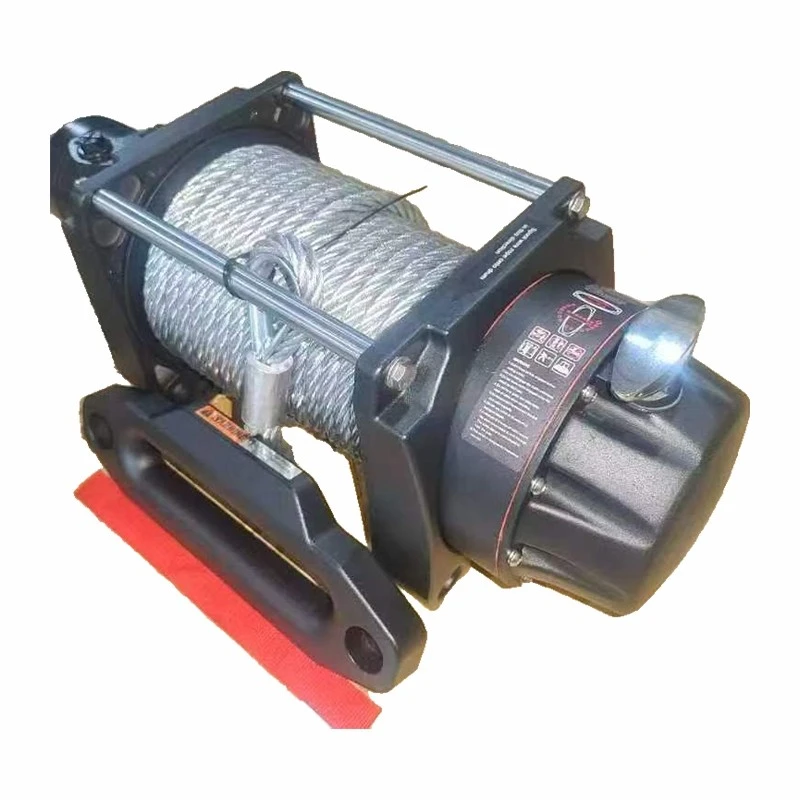
As a hydraulic recovery winch supplier, we offer a wide range of winches designed with efficiency in mind. Our 20000 Lb Hydraulic Winch is a powerful and efficient option for heavy - duty applications. It features a high - efficiency hydraulic motor and a well - designed drum and gearbox, ensuring maximum energy transfer and smooth operation.
Our Warn Hydraulic Winch is another popular choice, known for its reliability and efficiency. With advanced hydraulic system design and high - quality components, this winch offers excellent performance in various recovery and industrial applications.
For lighter loads, our 12000 Lb Hydraulic Winch provides a cost - effective and efficient solution. It is designed to be compact and easy to install, while still delivering reliable pulling power.
Conclusion
The efficiency of a hydraulic recovery winch is a crucial factor that affects its performance, cost - effectiveness, and longevity. By understanding the factors that influence efficiency, measuring it accurately, and choosing high - efficiency winches, users can enjoy significant benefits such as energy savings, reduced heat generation, and increased productivity.
As a hydraulic recovery winch supplier, we are committed to providing our customers with the most efficient and reliable winches on the market. If you are in the market for a hydraulic recovery winch or have any questions about our products, we encourage you to contact us for further information and to discuss your specific requirements. Our team of experts is ready to assist you in finding the perfect winch solution for your needs.
References
- Hydraulic Power Systems Handbook, various authors
- Principles of Hydraulic Machinery, published by an academic press
- Industry reports on hydraulic winch technology and efficiency trends