Hey there! As a supplier of slew drive gearboxes, I often get asked about the torque transmission efficiency of these nifty devices. So, let's dive right in and break it down in plain English.
First off, what's torque transmission efficiency? Well, it's basically a measure of how well a slew drive gearbox can transfer the input torque to the output. In simpler terms, it tells us how much of the power we put into the gearbox actually gets used to do the work we want it to do, like rotating a platform or moving a heavy load.


There are a bunch of factors that can affect the torque transmission efficiency of a slew drive gearbox. One of the biggies is the type of gears used. We've got different kinds of gears, like spur gears, helical gears, and worm gears, and each has its own pros and cons when it comes to efficiency.
Spur gears are pretty straightforward. They're easy to make and can handle a decent amount of torque. But they can be a bit noisy, and their efficiency isn't always the best, especially at high speeds. Helical gears, on the other hand, are a bit more complex. They have teeth that are cut at an angle, which helps them mesh more smoothly and quietly. This also means they can be more efficient than spur gears, especially at higher speeds.
Worm gears are another option. They're great for applications where you need a high reduction ratio, like in a crane or a wind turbine. But they can be less efficient than other types of gears because of the sliding action between the worm and the gear. This sliding creates friction, which can eat up some of the power and reduce the overall efficiency.
Another factor that affects efficiency is the quality of the materials used in the gearbox. High - quality materials, like hardened steel or bronze, can reduce friction and wear, which in turn can improve efficiency. Cheaper materials might be more prone to wear and tear, leading to a drop in efficiency over time.
The lubrication of the gearbox is also crucial. Good lubrication reduces friction between the gears, allowing them to move more freely. This not only improves efficiency but also extends the lifespan of the gearbox. We need to use the right type of lubricant for the specific application, taking into account factors like temperature, speed, and load.
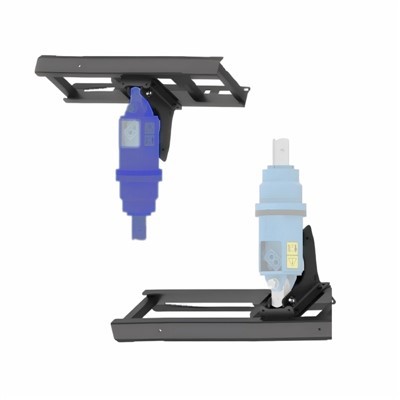
Now, let's talk about some of the products we offer. We've got the 3.15 Slewing Gearbox Reducer. This bad boy is designed to handle a wide range of loads and speeds. It uses high - quality helical gears, which gives it a pretty good torque transmission efficiency. The gears are precision - machined to ensure smooth operation and minimal power loss.
Then there's the 3.20 Slewing Gearbox Reducer. This one is a bit more heavy - duty. It's built to handle larger loads and can be used in more demanding applications. The design of this gearbox focuses on maximizing efficiency while maintaining durability. We've used advanced materials and a well - thought - out lubrication system to keep the friction low and the efficiency high.
And for those really specialized applications, we have the 4.12 Putzmeister Rotary Reducer. This reducer is engineered for specific industrial needs, like in concrete pumps or large - scale construction equipment. It's got a unique gear configuration that's optimized for high - torque applications, and we've paid close attention to every detail to ensure top - notch torque transmission efficiency.
So, how do we measure the torque transmission efficiency of these gearboxes? Well, we use a combination of theoretical calculations and real - world testing. We start by looking at the design of the gearbox and using equations to estimate the efficiency based on factors like gear type, material properties, and lubrication. Then we put the gearbox through a series of tests in our lab. We measure the input power and the output power, and then calculate the efficiency as the ratio of output power to input power.
In real - world applications, the efficiency can vary a bit from what we measure in the lab. There are all sorts of factors that can come into play, like the operating environment, the load profile, and the maintenance of the gearbox. But we design our gearboxes to be as efficient as possible under a wide range of conditions.
If you're in the market for a slew drive gearbox, you're probably wondering why torque transmission efficiency matters. Well, for starters, a more efficient gearbox means you'll save on energy costs. If less power is being wasted as heat or noise, you're using less electricity or fuel to run your equipment. This can add up to significant savings over time, especially if you're running multiple gearboxes or using them in high - demand applications.
Efficiency also affects the performance of your equipment. A gearbox with high torque transmission efficiency can respond more quickly to changes in load and speed. This means your machinery can operate more smoothly and precisely, which is crucial in applications like robotics or precision manufacturing.
Another benefit of high - efficiency gearboxes is that they tend to last longer. Less friction means less wear and tear on the gears and other components. This reduces the need for frequent maintenance and replacement, which can save you both time and money in the long run.
So, if you're looking for a reliable and efficient slew drive gearbox, look no further. We've got a range of products to suit different needs and budgets. Whether you're a small - scale manufacturer or a large industrial player, we can help you find the right gearbox for your application.
If you're interested in learning more about our products or have any questions about torque transmission efficiency, don't hesitate to reach out. We're here to help you make the best choice for your business. Let's have a chat and see how we can work together to get you the most efficient and cost - effective slew drive gearbox solution.
References
- "Gear Design and Application" by Dudley, Darle W.
- "Mechanical Engineering Design" by Shigley, Joseph E. and Mischke, Charles R.