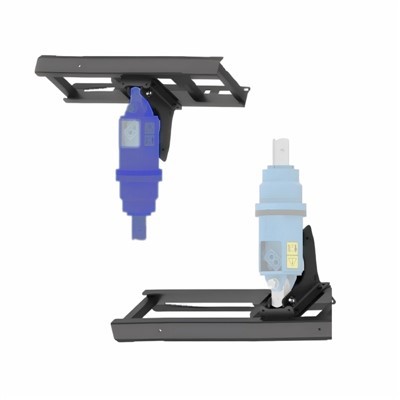
As a seasoned supplier of auger drives, I've encountered numerous inquiries regarding the versatility of these powerful tools. One question that frequently arises is whether an auger drive can be used for trenching. In this blog post, I'll delve into this topic, exploring the feasibility, limitations, and considerations when using an auger drive for trenching.
Understanding Auger Drives
Before we discuss trenching applications, let's first understand what an auger drive is. An auger drive is a hydraulic or mechanical attachment that powers an auger bit, which is a helical-shaped drill used to bore holes in the ground. Auger drives are commonly used in various industries, including construction, landscaping, agriculture, and utilities, for tasks such as fence post installation, tree planting, and soil sampling.


There are different types of auger drives available, each designed for specific applications and equipment. For instance, the PD4 Auger Drive Replacement is a popular choice for replacing worn-out or damaged auger drives in certain models of equipment. Meanwhile, the Mini Excavator Auger Drive is specifically designed to be used with mini excavators, providing a compact and efficient solution for digging holes in tight spaces. The Mini Skid Steer Auger Drive is another option, suitable for use with mini skid steers and offering similar benefits.
The Feasibility of Using an Auger Drive for Trenching
In theory, an auger drive can be used for trenching. By making a series of closely spaced holes along a desired line, it is possible to create a trench-like effect. However, there are several factors to consider before attempting to use an auger drive for trenching.
Soil Conditions
The type of soil plays a crucial role in determining the feasibility of using an auger drive for trenching. Auger drives work best in loose, sandy, or loamy soils. In these types of soils, the auger bit can easily penetrate the ground and remove the soil efficiently. However, in hard, compacted soils, rocky soils, or soils with a high clay content, the auger bit may struggle to penetrate, and the process of trenching can become time-consuming and difficult.
Trench Dimensions
The dimensions of the trench also matter. Auger drives are typically designed to create holes of a specific diameter. While it is possible to create a wider trench by making multiple adjacent holes, this method may not be practical for very wide trenches. Additionally, the depth of the trench is limited by the length of the auger bit and the reach of the equipment. If you need to create a deep trench, you may need to use a longer auger bit or a different trenching method altogether.
Trench Shape
Another consideration is the shape of the trench. Auger drives create round holes, so when using them for trenching, the resulting trench will have a series of semi-circular indentations. This may not be suitable for applications where a smooth, straight-sided trench is required, such as for laying pipes or cables.
Advantages of Using an Auger Drive for Trenching
Despite the limitations, there are some advantages to using an auger drive for trenching in certain situations.
Cost-Effective
If you already own an auger drive and the soil conditions are suitable, using it for trenching can be a cost-effective alternative to renting or purchasing a dedicated trenching machine. You can save on equipment rental or purchase costs, as well as on transportation and setup fees.
Versatility
Auger drives are versatile tools that can be used for multiple applications. In addition to trenching, they can be used for boring holes for fence posts, tree planting, and other tasks. This means that you can get more value out of your equipment by using it for different purposes.
Accessibility
In some cases, an auger drive may be more accessible than a dedicated trenching machine. For example, if you need to create a trench in a tight or hard-to-reach area, an auger drive can be easily maneuvered into position. This can be particularly useful in residential or commercial settings where space is limited.
Limitations and Considerations
As mentioned earlier, there are several limitations and considerations when using an auger drive for trenching.
Time-Consuming
Creating a trench using an auger drive can be a time-consuming process, especially if the soil is hard or compacted. You may need to make multiple passes with the auger bit to achieve the desired depth and width, and the process of removing the soil from the holes can also be slow.
Inconsistent Trench Quality
The quality of the trench created using an auger drive may not be as consistent as that created using a dedicated trenching machine. The semi-circular indentations left by the auger bit can make the trench walls uneven, which may not be suitable for some applications.
Safety Concerns
Using an auger drive for trenching requires proper safety precautions. The rotating auger bit can be dangerous, and there is a risk of injury if the operator is not properly trained or if the equipment is not used correctly. Additionally, the process of removing the soil from the holes can create dust and debris, which can pose a health hazard if inhaled.
Alternatives to Using an Auger Drive for Trenching
If the limitations of using an auger drive for trenching outweigh the advantages, there are several alternatives available.
Trencher
A trencher is a dedicated machine designed specifically for creating trenches. There are different types of trenchers available, including walk-behind trenchers, ride-on trenchers, and mini trenchers. Trenchers are more efficient and can create a smoother, more consistent trench than an auger drive. They are also better suited for hard, compacted soils and can handle larger trench dimensions.
Backhoe
A backhoe is another option for trenching. Backhoes are versatile machines that can be used for a variety of tasks, including digging trenches. They are equipped with a bucket that can be used to excavate the soil and create a trench. Backhoes are more powerful than auger drives and can handle larger trench dimensions and harder soils.
Excavator
An excavator is a heavy-duty machine that is commonly used for large-scale trenching projects. Excavators are equipped with a hydraulic arm and a bucket that can be used to dig deep, wide trenches quickly and efficiently. They are suitable for a variety of soil conditions and can handle large volumes of soil.
Conclusion
In conclusion, while an auger drive can be used for trenching in certain situations, it is not the most efficient or practical method in all cases. The feasibility of using an auger drive for trenching depends on several factors, including soil conditions, trench dimensions, and the desired trench shape. Before attempting to use an auger drive for trenching, it is important to carefully consider these factors and weigh the advantages and limitations.
If you are unsure whether an auger drive is the right tool for your trenching project, or if you need more information about our auger drives, please feel free to contact us. Our team of experts is always ready to assist you and provide you with the best solutions for your needs. Whether you are looking for a PD4 Auger Drive Replacement, a Mini Excavator Auger Drive, or a Mini Skid Steer Auger Drive, we have the products and expertise to help you get the job done.
References
- Construction Equipment Guide: "Auger Drives: A Versatile Tool for Multiple Applications"
- Landscaping Magazine: "Using Auger Drives for Trenching: Pros and Cons"
- Agricultural Engineering Journal: "Soil Conditions and Their Impact on Auger Drive Performance"