Hey there! As a frame supplier, I'm super stoked to spill the beans on how frames are used in textile manufacturing. Frames play a crucial role in this industry, and I'm gonna break it down for you in a way that's easy to understand.
First off, let's talk about the basics. In textile manufacturing, frames are used for a variety of purposes, from supporting the fabric during the weaving process to providing a structure for finishing and displaying the final product. They come in all shapes and sizes, depending on the specific needs of the manufacturer.
One of the most common uses of frames in textile manufacturing is in the weaving process. When you're weaving fabric, you need a way to hold the warp threads (the lengthwise threads) in place while you weave the weft threads (the crosswise threads) over and under them. That's where frames come in. They provide a stable structure for the warp threads, allowing you to create a uniform and consistent weave.
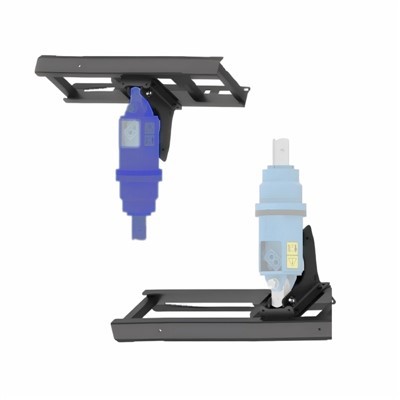
There are several different types of frames used in weaving, each with its own unique features and benefits. For example, the Side Shift Cradle Frame Side Shift Cradle Frame is a popular choice for many weavers. This type of frame allows you to adjust the position of the warp threads side to side, which can be really useful for creating different patterns and designs. It also provides a smooth and stable surface for the weft threads to glide over, resulting in a high-quality weave.
Another type of frame commonly used in weaving is the Fixed Centre Cradle Frame Fixed Centre Cradle Frame. As the name suggests, this frame has a fixed center, which means the warp threads are held in place in the middle of the frame. This type of frame is great for creating simple, straight weaves, and it's often used in industrial settings where speed and efficiency are key.
But frames aren't just used in the weaving process. They also play an important role in the finishing and display of textile products. After the fabric has been woven, it needs to be finished to give it the desired look and feel. This can involve processes like washing, dyeing, printing, and ironing. Frames are used to support the fabric during these processes, ensuring that it stays flat and smooth and that the finishing treatments are applied evenly.
For example, when you're dyeing fabric, you need to immerse it in a dye bath. A frame can be used to hold the fabric in place in the dye bath, preventing it from bunching up or tangling. This ensures that the dye is absorbed evenly by the fabric, resulting in a consistent color. Similarly, when you're printing on fabric, a frame can be used to hold the fabric in place while the printing is done, ensuring that the design is printed accurately and clearly.
Frames are also used in the display of textile products. Whether you're selling fabric in a store or showcasing your textile creations at a trade show, a frame can be used to present the fabric in an attractive and professional way. A well-designed frame can enhance the visual appeal of the fabric, making it more likely to catch the eye of potential customers.
In addition to their practical uses, frames can also have a significant impact on the quality and efficiency of textile manufacturing. A high-quality frame can help to reduce waste and improve productivity by ensuring that the fabric is woven, finished, and displayed correctly. It can also help to improve the overall quality of the textile products, making them more durable, comfortable, and attractive.
For example, a frame that is made from high-quality materials and is well-designed can provide a stable and consistent support for the fabric during the weaving process. This can help to reduce the number of broken threads and other defects, resulting in a higher-quality weave. Similarly, a frame that is designed to be easy to use and maintain can help to improve the efficiency of the finishing and display processes, reducing the time and cost required to produce and present the textile products.


So, as you can see, frames are an essential part of textile manufacturing. They play a crucial role in the weaving, finishing, and display of textile products, and they can have a significant impact on the quality and efficiency of the manufacturing process. If you're in the textile industry, whether you're a weaver, a finisher, or a retailer, investing in high-quality frames is definitely worth considering.
If you're interested in learning more about the frames we offer or if you have any questions about how frames can be used in your textile manufacturing process, please don't hesitate to get in touch. We'd love to have a chat with you and help you find the perfect frames for your needs. Whether you're looking for a Side Shift Cradle Frame, a Fixed Centre Cradle Frame, or something else entirely, we've got you covered.
References
- Textile Manufacturing Handbook: A Comprehensive Guide to the Industry
- Weaving Techniques and Frame Design: Best Practices for High-Quality Fabric Production
- Finishing and Displaying Textiles: Using Frames to Enhance Product Appeal