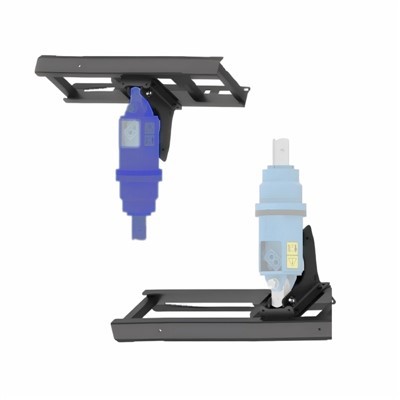
Hey there! As a supplier of Auger Pin Clips, I often get asked about how to test the quality of these little but crucial components. Auger Pin Clips play a vital role in keeping the various parts of an auger together, so it's super important to make sure they're up to the mark. In this blog, I'm gonna share some practical ways to test the quality of Auger Pin Clips.
1. Visual Inspection
The first step in testing Auger Pin Clips is a good old - fashioned visual inspection. You don't need any fancy equipment for this; just your eyes and maybe a magnifying glass if you want to be extra thorough.
Start by looking at the surface finish of the clip. A high - quality Auger Pin Clip should have a smooth surface, free from any cracks, pits, or rough edges. Cracks can be a major problem as they can lead to the clip breaking under stress, which could cause the auger parts to come loose. Pits and rough edges might also weaken the clip over time.
Check the dimensions of the clip. It should match the specifications provided by the manufacturer. If it's too big or too small, it might not fit properly in the auger, which can affect its performance. You can use a simple caliper to measure the key dimensions like the width, thickness, and length of the clip.
2. Material Analysis
The material of the Auger Pin Clip is a key factor in determining its quality. Most high - quality clips are made from strong and durable metals like steel.
One way to get an idea of the material quality is by performing a hardness test. You can use a hardness tester, which is available in different types. A simple Rockwell hardness tester can give you a quick reading of the hardness of the clip. A clip with the right hardness will be able to withstand the forces it's subjected to during the operation of the auger.
Another aspect is the corrosion resistance of the material. Augers are often used in harsh environments, so the clip needs to be able to resist rust and corrosion. You can do a simple salt - spray test at home. Place the clip in a salt - water solution for a certain period (usually 24 - 48 hours) and then check for any signs of corrosion. If the clip shows significant rust or corrosion, it might not be of good quality.
3. Functionality Testing
After the visual and material checks, it's time to test how the Auger Pin Clip actually works.
First, try fitting the clip into the Auger Tooth Pocket. It should fit snugly without being too loose or too tight. A loose clip won't hold the parts together securely, while a too - tight clip might be difficult to install and remove, and could also cause damage to the pocket or the clip itself.
Next, check the locking mechanism. The clip should be able to lock in place effectively. You can simulate the forces that the clip will experience during normal operation. For example, gently pull on the parts that the clip is holding together to see if the clip stays in place. If it pops out easily, it's not a good sign.


You can also perform a fatigue test. This involves repeatedly installing and removing the clip from the Auger Drill Pilot or the tooth pocket. After a certain number of cycles (say, 100 - 200 times), check the clip for any signs of wear or deformation. A high - quality clip should be able to withstand this kind of repeated use without significant damage.
4. Compatibility Testing
Auger Pin Clips need to be compatible with the other parts of the auger system.
Test the clip with different types of Auger Tooth Pockets and Auger Drill Pilots that it's supposed to work with. Make sure it fits and functions properly in all of them. Sometimes, a clip might work well with one type of pocket but not with another. This could be due to slight differences in the design or dimensions of the parts.
Also, check the compatibility with different auger models. If you're supplying clips for a range of auger models, it's important to ensure that the clip works well with all of them. You can do this by testing the clip on actual auger systems or using mock - up models.
5. Environmental Testing
As mentioned earlier, augers are used in various environments, so the Auger Pin Clip needs to perform well under different conditions.
If the auger is going to be used in cold environments, you can test the clip's performance at low temperatures. Place the clip in a freezer for a few hours and then try to install and operate it in a mock - up auger system. Cold temperatures can make some materials brittle, so the clip should still be able to function properly.
For hot and humid environments, you can create a hot - and - humid chamber. Place the clip in the chamber for a period of time and then check for any signs of deformation or loss of functionality. The clip should be able to withstand the high temperatures and humidity without deteriorating.
Why Choose Our Auger Pin Clips
At our company, we take quality seriously. Our Auger Pin Clips go through all these tests and more before they reach the market. We use high - grade materials and state - of - the - art manufacturing processes to ensure that our clips are of the highest quality.
Our clips are designed to be compatible with a wide range of auger models and parts, so you don't have to worry about fitting issues. We also offer excellent customer support, so if you have any questions or concerns about our products, our team is always ready to help.
If you're in the market for high - quality Auger Pin Clips, we'd love to hear from you. Whether you're a contractor, a distributor, or someone who needs these clips for a DIY project, we can provide you with the right products at a competitive price. Don't hesitate to reach out to us for more information or to start a purchase negotiation.
References
- "Handbook of Auger Design and Manufacturing"
- "Materials Science for Construction Equipment"
- "Testing Standards for Auger Wear Parts"