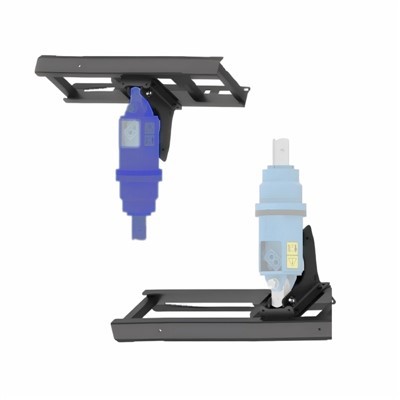
Hey there! As a slewing drive supplier, I've spent a good deal of time getting to know every nook and cranny of these amazing pieces of machinery. Slewing drives are super versatile and are used in all sorts of applications, from construction equipment to solar tracking systems. So, what are the main components of a slewing drive? Let's dive right in.
1. Worm Gear
The worm gear is like the heart of the slewing drive. It's a type of gear that has a screw-like appearance. The way it works is pretty cool. When the worm (the screw part) rotates, it meshes with the worm wheel, which is a large, circular gear. This interaction allows for a high reduction ratio, meaning it can turn a high-speed, low-torque input into a low-speed, high-torque output.
Think about it like this: if you've ever tried to lift a really heavy object, you know it takes a lot of force. The worm gear in a slewing drive helps to multiply that force, making it easier to move heavy loads. It's also great for providing precise control. You can move things very slowly and steadily, which is crucial in many applications. For example, in a solar tracking system, the slewing drive needs to move the solar panels just a little bit at a time to follow the sun throughout the day. The worm gear makes this precise movement possible.
2. Worm Wheel
The worm wheel is the other half of the gear system in a slewing drive. It's a large, circular gear that meshes with the worm gear. The teeth on the worm wheel are designed to fit perfectly with the threads on the worm gear, allowing for smooth and efficient power transmission.
One of the key features of the worm wheel is its ability to handle high loads. Because it has a large surface area, it can distribute the force evenly, reducing wear and tear on the gears. This means that the slewing drive can last a long time, even when it's used in tough conditions.
The material used to make the worm wheel is also important. Usually, it's made from a high-strength alloy, which can withstand the high pressures and forces involved in the operation of the slewing drive. Some slewing drives even use special coatings on the worm wheel to reduce friction and improve efficiency.
3. Housing
The housing of a slewing drive is like the protective shell. It holds all the other components together and keeps them safe from the elements. The housing is typically made from a strong and durable material, such as cast iron or steel.
One of the main functions of the housing is to provide a rigid structure for the gears to operate within. It prevents the gears from moving around or shifting out of place, which could cause damage or reduce the efficiency of the slewing drive. The housing also helps to dissipate heat, which is generated during the operation of the gears. If the heat isn't dissipated properly, it can cause the gears to wear out faster or even fail.
In addition to protecting the internal components, the housing also plays a role in the installation of the slewing drive. It usually has mounting holes or flanges that allow it to be easily attached to the equipment or structure where it will be used. This makes it convenient for users to install and use the slewing drive in their applications.
4. Bearings
Bearings are essential components in a slewing drive. They support the rotating parts, such as the worm gear and the worm wheel, and allow them to rotate smoothly. There are different types of bearings used in slewing drives, including ball bearings and roller bearings.
Ball bearings are great for reducing friction and providing smooth rotation. They consist of small balls that are held in place by a cage. When the rotating part moves, the balls roll between the inner and outer races of the bearing, reducing the amount of friction. This helps to improve the efficiency of the slewing drive and reduce energy consumption.
Roller bearings, on the other hand, are better suited for handling heavy loads. They have cylindrical or tapered rollers that can support a greater amount of weight. In a slewing drive, roller bearings are often used in the areas where there are high radial or axial loads.


Proper lubrication of the bearings is also crucial. Lubrication helps to reduce friction and wear, and it also protects the bearings from corrosion. Most slewing drives come with a lubrication system that ensures the bearings are always well-lubricated.
5. Seals
Seals are another important component of a slewing drive. They prevent dirt, dust, and moisture from entering the housing and damaging the internal components. There are different types of seals used in slewing drives, such as lip seals and O-rings.
Lip seals are designed to fit tightly around the rotating parts, creating a barrier that keeps contaminants out. They are usually made from a flexible material, such as rubber, which allows them to conform to the shape of the shaft or other components. O-rings, on the other hand, are circular seals that are used to seal joints and connections. They are made from a variety of materials, including rubber and silicone, and they provide a reliable seal against fluids and gases.
Maintaining the seals is important to ensure the long-term performance of the slewing drive. Over time, the seals can wear out or become damaged, which can allow contaminants to enter the housing. Regular inspection and replacement of the seals can help to prevent this from happening.
6. Input Shaft
The input shaft is the part of the slewing drive that receives the power from the motor or other power source. It's usually connected to the worm gear, and it transfers the rotational motion from the power source to the gear system.
The input shaft needs to be strong and durable to handle the high torque and forces involved in the operation of the slewing drive. It's typically made from a high-strength alloy steel, which can withstand the stresses and strains of continuous use.
In some slewing drives, the input shaft may also have a coupling or a keyway, which allows it to be easily connected to the motor or other power source. This makes it convenient for users to install and use the slewing drive in their applications.
Related Products
If you're interested in other types of equipment related to slewing drives, you might want to check out these products: Hydraulic Winch for Tow Truck, Hydraulic Winch for Skid Steer, and Ramsey Hydraulic Winch. These hydraulic winches are also widely used in various industries and can provide reliable power and performance.
Conclusion
So, there you have it - the main components of a slewing drive. Each component plays a crucial role in the operation of the slewing drive, and they all work together to provide a reliable and efficient solution for moving heavy loads and providing precise control.
If you're in the market for a slewing drive or have any questions about our products, don't hesitate to reach out. We're here to help you find the right solution for your needs. Whether you're working on a construction project, a solar tracking system, or any other application that requires a slewing drive, we've got you covered.
References
- Machinery's Handbook, 31st Edition
- Handbook of Mechanical Engineering Calculations, 4th Edition