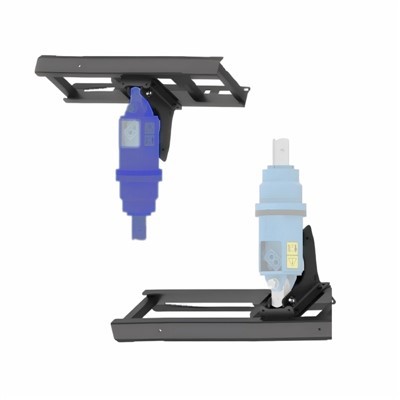
In the realm of mechanical engineering, slew drive gearboxes play a pivotal role in a wide array of applications. As a dedicated slew drive gearbox supplier, I am constantly engaged in discussions about the technical aspects of these remarkable devices, and one question that frequently surfaces is: "What is the speed ratio of a slew drive gearbox?" In this blog post, I will delve into the concept of speed ratio, its significance, and how it pertains to our slew drive gearboxes.
Understanding the Basics of Speed Ratio
The speed ratio of a gearbox is a fundamental parameter that describes the relationship between the input speed and the output speed of the gearbox. It is defined as the ratio of the rotational speed of the input shaft to the rotational speed of the output shaft. Mathematically, it can be expressed as:
[ \text{Speed Ratio} = \frac{\text{Input Speed}}{\text{Output Speed}} ]
For example, if a gearbox has a speed ratio of 10:1, it means that for every 10 revolutions of the input shaft, the output shaft will make 1 revolution. This reduction in speed is accompanied by an increase in torque, which is a key characteristic of gearboxes.
Significance of Speed Ratio in Slew Drive Gearboxes
In the context of slew drive gearboxes, the speed ratio is of utmost importance as it directly affects the performance and functionality of the system. Here are some key reasons why the speed ratio matters:
Torque Amplification
One of the primary functions of a slew drive gearbox is to amplify the torque provided by the input source. By reducing the output speed, the gearbox can increase the torque at the output shaft. This is particularly useful in applications where high torque is required to rotate heavy loads, such as in cranes, wind turbines, and solar tracking systems.
Precision Control
The speed ratio also plays a crucial role in achieving precise control over the rotation of the output shaft. A lower speed ratio allows for finer control of the rotational speed, which is essential in applications that require accurate positioning, such as in robotic arms and antenna tracking systems.
Energy Efficiency
Selecting the appropriate speed ratio can also improve the energy efficiency of the system. By matching the speed ratio to the requirements of the application, the gearbox can operate at its optimal efficiency, reducing energy consumption and minimizing wear and tear on the components.
Factors Affecting the Speed Ratio of Slew Drive Gearboxes
The speed ratio of a slew drive gearbox is determined by several factors, including the design of the gearbox, the number of gear stages, and the gear tooth profiles. Here are some key factors that can influence the speed ratio:
Gear Design
The design of the gears used in the gearbox has a significant impact on the speed ratio. Different types of gears, such as spur gears, helical gears, and worm gears, have different characteristics and can achieve different speed ratios. For example, worm gears are commonly used in slew drive gearboxes because they can provide high speed ratios in a compact design.
Number of Gear Stages
The number of gear stages in a gearbox also affects the speed ratio. A gearbox with multiple stages can achieve higher speed ratios than a single-stage gearbox. However, adding more stages also increases the complexity and cost of the gearbox.
Gear Tooth Profiles
The tooth profiles of the gears can also influence the speed ratio. Different tooth profiles, such as involute, cycloidal, and trochoidal, have different contact patterns and can affect the efficiency and performance of the gearbox.
Our Slew Drive Gearbox Offerings
As a leading slew drive gearbox supplier, we offer a wide range of gearboxes with different speed ratios to meet the diverse needs of our customers. Here are some of our popular products:
3.15 Slewing Gearbox Reducer
This gearbox features a speed ratio of 3.15:1 and is suitable for applications that require moderate torque and speed reduction. It is commonly used in small to medium-sized cranes, conveyor systems, and industrial machinery.
3.20 Slewing Gearbox Reducer
With a speed ratio of 3.20:1, this gearbox offers a slightly higher torque amplification than the 3.15:1 gearbox. It is ideal for applications that require higher torque, such as in large cranes, wind turbines, and solar tracking systems.
4.12 Putzmeister Rotary Reducer
This gearbox has a speed ratio of 4.12:1 and is specifically designed for use in Putzmeister equipment. It is known for its high reliability, durability, and performance, making it a popular choice for construction and industrial applications.
Selecting the Right Speed Ratio for Your Application
Choosing the right speed ratio for your application is crucial to ensure optimal performance and efficiency. Here are some factors to consider when selecting a speed ratio:


Load Requirements
The first step in selecting the right speed ratio is to determine the load requirements of your application. Consider the weight and size of the load, as well as the required torque and speed. This will help you determine the minimum torque and speed ratio needed to rotate the load.
Operating Conditions
The operating conditions of your application, such as the environment, temperature, and humidity, can also affect the performance of the gearbox. Make sure to choose a gearbox that is designed to withstand the specific operating conditions of your application.
System Compatibility
It is also important to ensure that the gearbox is compatible with the rest of the system, including the input source, output device, and control system. Consider the power requirements, shaft sizes, and mounting options to ensure a proper fit.
Conclusion
In conclusion, the speed ratio is a critical parameter in slew drive gearboxes that directly affects the performance, functionality, and efficiency of the system. By understanding the concept of speed ratio and its significance, you can make an informed decision when selecting a gearbox for your application. As a trusted slew drive gearbox supplier, we are committed to providing high-quality products and expert advice to help you choose the right gearbox for your needs. If you have any questions or need further assistance, please do not hesitate to contact us for a detailed consultation and procurement discussion.
References
- Norton, R. L. (2004). Design of Machinery: An Introduction to the Synthesis and Analysis of Mechanisms and Machines. McGraw-Hill.
- Shigley, J. E., & Mischke, C. R. (2001). Mechanical Engineering Design. McGraw-Hill.
- Budynas, R. G., & Nisbett, J. K. (2011). Shigley's Mechanical Engineering Design. McGraw-Hill.