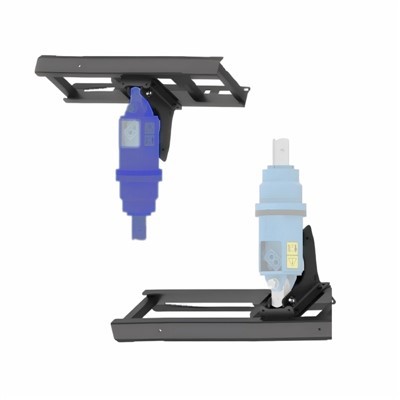
As a supplier of Comer planetary gearboxes, I've witnessed firsthand the critical role that proper cooling plays in the performance and longevity of these remarkable pieces of machinery. In this blog, I'll delve into the cooling requirements for Comer planetary gearboxes, exploring the factors that influence them and the various cooling methods available.
Why Cooling is Essential for Comer Planetary Gearboxes
Comer planetary gearboxes are designed to transmit high torque and power in a compact and efficient manner. However, during operation, a significant amount of heat is generated due to friction between the gears, bearings, and other moving parts. If this heat is not dissipated effectively, it can lead to a range of problems, including:
- Reduced efficiency: Excessive heat can cause the lubricant to break down, increasing friction and reducing the overall efficiency of the gearbox.
- Premature wear and tear: High temperatures can accelerate the wear of gears, bearings, and other components, leading to premature failure and costly repairs.
- Seal damage: Heat can cause seals to deteriorate, allowing lubricant to leak out and contaminants to enter the gearbox, further compromising its performance.
- Overheating: In extreme cases, overheating can cause the gearbox to seize up, resulting in a complete breakdown and potentially dangerous situations.
To prevent these issues and ensure the reliable operation of Comer planetary gearboxes, it is essential to provide adequate cooling to maintain the temperature within the recommended range.
Factors Affecting Cooling Requirements
The cooling requirements for a Comer planetary gearbox depend on several factors, including:
- Power rating: The higher the power rating of the gearbox, the more heat it will generate during operation, and the greater the cooling requirements.
- Operating conditions: The ambient temperature, humidity, and ventilation in the operating environment can all affect the cooling efficiency of the gearbox. In hot and humid conditions, for example, it may be necessary to provide additional cooling to prevent overheating.
- Duty cycle: The frequency and duration of operation can also impact the cooling requirements. Gearboxes that are operated continuously at high loads will generate more heat and require more cooling than those that are used intermittently.
- Lubrication type and quality: The type and quality of lubricant used in the gearbox can affect its cooling performance. High-quality lubricants with good thermal properties can help to dissipate heat more effectively and reduce the cooling requirements.
Cooling Methods for Comer Planetary Gearboxes
There are several cooling methods available for Comer planetary gearboxes, each with its own advantages and disadvantages. The choice of cooling method will depend on the specific application and the cooling requirements of the gearbox.
Natural Convection Cooling
Natural convection cooling is the simplest and most cost-effective method of cooling a Comer planetary gearbox. It relies on the natural flow of air around the gearbox to dissipate heat. The gearbox is typically designed with fins or other heat-dissipating surfaces to increase the surface area available for heat transfer.
Natural convection cooling is suitable for applications where the power rating of the gearbox is relatively low and the operating conditions are not too harsh. However, it may not be sufficient for high-power applications or in environments with high ambient temperatures.
Forced Air Cooling
Forced air cooling involves the use of a fan or blower to circulate air around the gearbox, increasing the rate of heat transfer. This method is more effective than natural convection cooling and can be used for applications with higher power ratings or in environments with limited ventilation.
Forced air cooling can be further enhanced by the use of heat sinks or other heat-dissipating devices. These devices increase the surface area available for heat transfer and improve the cooling efficiency of the gearbox.
Liquid Cooling
Liquid cooling is a more advanced cooling method that involves the use of a liquid coolant, such as water or oil, to remove heat from the gearbox. The coolant is circulated through a heat exchanger, where it absorbs heat from the gearbox and transfers it to the surrounding environment.
Liquid cooling is more effective than air cooling and can be used for applications with very high power ratings or in environments with extreme operating conditions. However, it is also more complex and expensive to install and maintain.
Combination Cooling
In some cases, a combination of cooling methods may be used to provide the most effective cooling solution for a Comer planetary gearbox. For example, a gearbox may be cooled by a combination of forced air cooling and liquid cooling to achieve the desired level of cooling performance.
Specific Examples of Comer Planetary Gearboxes and Their Cooling Requirements
Let's take a look at two specific examples of Comer planetary gearboxes and their cooling requirements:


- Sany Suote Gs9t99: This gearbox is designed for high-power applications and has a relatively high power rating. It is typically used in heavy machinery and industrial equipment. Due to its high power output, the Sany Suote Gs9t99 requires a more advanced cooling system, such as liquid cooling, to maintain the temperature within the recommended range.
- Comer Pg1003: This gearbox is designed for medium-power applications and has a lower power rating compared to the Sany Suote Gs9t99. It is commonly used in agricultural machinery and light industrial equipment. For the Comer Pg1003, forced air cooling may be sufficient to meet the cooling requirements, especially in normal operating conditions.
Conclusion
Proper cooling is essential for the reliable operation and longevity of Comer planetary gearboxes. By understanding the factors that affect cooling requirements and the various cooling methods available, you can choose the most appropriate cooling solution for your specific application.
As a supplier of Comer planetary gearboxes, we have the expertise and experience to help you select the right gearbox and cooling system for your needs. If you have any questions or need further information, please don't hesitate to contact us. We look forward to working with you to ensure the optimal performance of your machinery.
References
- Comer Industries Technical Manuals
- Gearbox Design and Application Guidelines
- Thermal Management in Industrial Machinery